

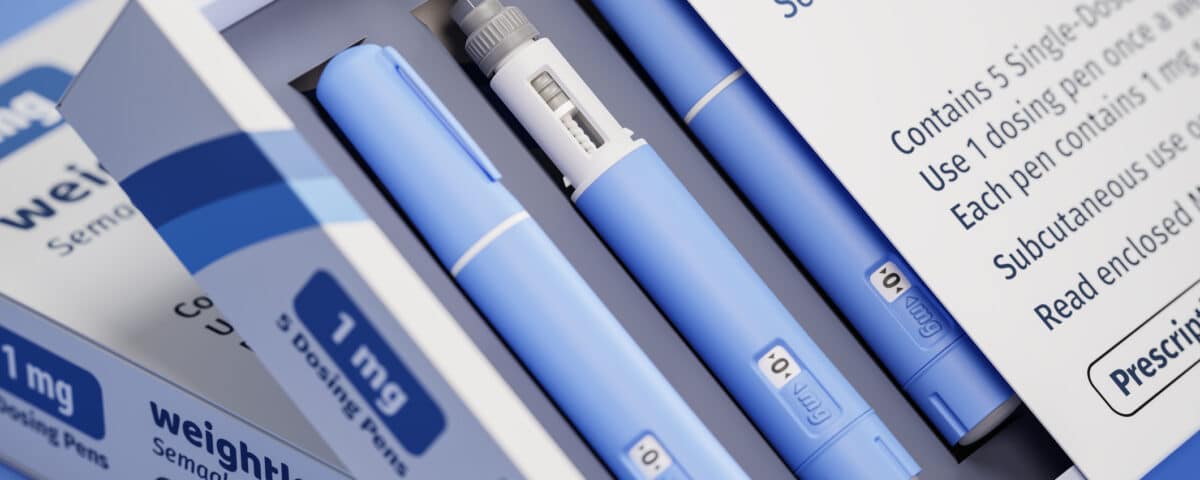
Two packages of 5 dosing pens each of a fictitious Semiglutin drug used for weight loss (antidiabetic medication or anti-obesity medication) on a blue transparent background. Fictitious package design
GLP-1 Medications: A Promising Tool for Weight Loss, but Not Without Considerations
The search for effective weight loss solutions has been an ongoing challenge for millions of people worldwide. In recent years, GLP-1 medications have gained significant attention for their potential to support weight loss.
Originally developed to treat type 2 diabetes, these injectable prescription medications have demonstrated strong results in helping individuals lose excess weight. But like any solution, they come with both advantages and limitations.
In this article, we explore the key benefits and considerations of GLP-1 medications for weight loss.
Advantages of GLP-1
1. Appetite Suppression
GLP-1 medications belong to a class of drugs known as GLP-1 receptor agonists. They work by mimicking a naturally occurring hormone (GLP-1) that regulates appetite.
This leads to:
• Increased feelings of fullness
• Reduced hunger
• Better control over calorie intake and cravings
2. Weight Loss Support
Clinical studies have demonstrated that GLP-1 medications can significantly support weight loss.
In some cases, individuals have experienced an average weight loss of 15% to 17% of their initial body weight over time—especially when combined with proper nutrition and lifestyle changes.
3. Blood Sugar Control
GLP-1 medications were initially developed for diabetes management.
They help:
• Regulate blood sugar levels
• Improve insulin response
• Reduce the risk of overeating linked to blood sugar fluctuations
This makes them particularly beneficial for individuals with insulin resistance or prediabetes.
4. Convenient Administration
Most GLP-1 medications are administered once per week via subcutaneous injection.
This:
• Simplifies treatment adherence
• Reduces the need for daily medication
• Provides a steady, long-lasting effect
Considerations and Limitations of GLP-1
1. Side Effects
Like any medication, GLP-1 can cause side effects.
Common ones include:
• Nausea
• Vomiting
• Diarrhea
• Constipation
These effects are often temporary but can impact daily comfort, especially at the beginning of treatment.
2. Cost
GLP-1 medications can be expensive and are not always covered by insurance for weight loss purposes.
This can represent a significant barrier for many individuals.
3. Long-Term Safety
While results are promising, long-term data is still evolving.
As relatively recent treatments in the context of weight management, it is important to:
• Evaluate risks vs. benefits
• Work with healthcare professionals
• Monitor long-term outcomes
4. Individual Response
Not everyone responds the same way to GLP-1 medications.
Some individuals experience strong results, while others may see more modest effects. Personal health status, lifestyle, and adherence all play a role.
Conclusion
GLP-1 medications represent a powerful and promising tool for weight loss. Their ability to reduce appetite, support weight loss, and regulate blood sugar makes them highly effective for many individuals.
However, they are not a standalone solution.
For long-term success, GLP-1 should be combined with:
• A structured, high-protein nutrition plan
• Healthy lifestyle habits
• Ongoing professional support
The key is not just losing weight—but maintaining it in a sustainable and healthy way.